Logo

About Brandon

Senior Full-Stack Engineer with deep roots in Linux and cloud platforms, focused on reliability, security, and systems that scale.

Hey — I’m Brandon Tillman.

Photo of Brandon Tillman
I’m a technologist at Charles Schwab with close to twenty years of hands-on experience building, operating, and securing systems across the stack. I don’t really think of myself as a “title-first” engineer. I’ve just always been curious about how things work, and I’ve followed that curiosity wherever it led.

My interest in technology started early. I grew up in Chandler, Arizona, and thanks to my older brother, there was always at least one computer in the house. I had a hand-me-down machine in my bedroom running MS-DOS, playing Oregon Trail and DOOM off 5.25" floppies. At some point, playing games turned into taking things apart. I started piecing together working desktops from whatever old hardware we had lying around, installing alternative operating systems like Ubuntu from burned CDs, and breaking things just to see if I could fix them again. That's where Linux first clicked for me.

Around age 12, I got incredibly lucky. A neighbor who owned a successful software company took an interest in teaching me real-world skills. He had me build and host my own blog using WordPress on a Linux VM running in AWS. I learned how to manage CentOS, configure Apache, and keep a website alive on the internet. That blog is still running today, and I still think about how formative that experience was.

By 14, I wanted computer upgrades badly enough that I started a small local business building custom desktops. I'd talk with customers about their needs and budgets, order the parts, and assemble everything myself. Around the same time, I was constantly trying (and often failing) to host different web apps — PHPBB forums for gaming communities, especially World of Warcraft guilds. I didn't always get things working, but I learned a lot by trying.

High school was… fine. I took web design and computer tech classes, but they were pretty basic and I struggled to stay engaged. I didn' t end up graduating, got my GED later without studying much (mostly to prove a point to myself), and earned my CompTIA A+ after taking a college course during my senior year.

Right after that, I started working from home for a web hosting company. I handled inbound calls and tickets, troubleshooting why customer websites weren't working. That role taught me a ton about Linux, cPanel, hosting platforms — and customer service. Explaining technical problems to stressed-out people turned out to be a useful skill.

From there, I joined a startup automating phone calls using custom software. My job was writing XML-based call scripts that drove the system. When another engineer left, I unexpectedly became the sole script engineer for a while and later trained offshore teams. I was young, way out of my comfort zone, and learning fast.

Just before I turned 19, I landed a contracting role doing systems administration at Charles Schwab. I started as an operator — monitoring production systems, triaging incidents, joining major outage calls, and helping restore service under pressure. One day during a shift, Schwab was hit by a massive Lizard Squad DDoS attack. Everything locked up. It was chaotic, stressful, and oddly clarifying. I learned that I function well when things are on fire.

I was hired full-time not long after and have been at Schwab ever since, moving through a lot of roles by design. Systems administrator, backend developer, full-stack engineer, platform and cloud engineer. I've written Perl automation scripts, built .NET APIs, created dashboards, mobile apps, web apps, GitHub Actions, automation pipelines, and internal tools. I've worked across Azure, AWS, and GCP (including two years as a platform engineer on Google Cloud doing Terraform and large-scale onboarding). I earned my RHCSA along the way to validate my Linux background.

What ties all of this together isn't a single specialty — it's systems thinking. I tend to ask questions like: How does this scale? How do we keep it secure? What happens when it breaks at 2am? What can we automate? Working in a highly regulated financial environment means there's no room for guesswork, and that's shaped how I approach design and operations.

I still deal with imposter syndrome, honestly. I know a little about a lot — Linux, networking, DNS, TLS, load balancing, cloud platforms, application architecture — and sometimes I wish I were deeper in one narrow area. Other times, I realize that seeing across layers is the thing I'm actually good at. I'm also great at code architecture, clean code, and simplifying syntax. I'm still figuring out whether I'm more of a developer, a platform engineer, or someone who eventually wants to lead teams.

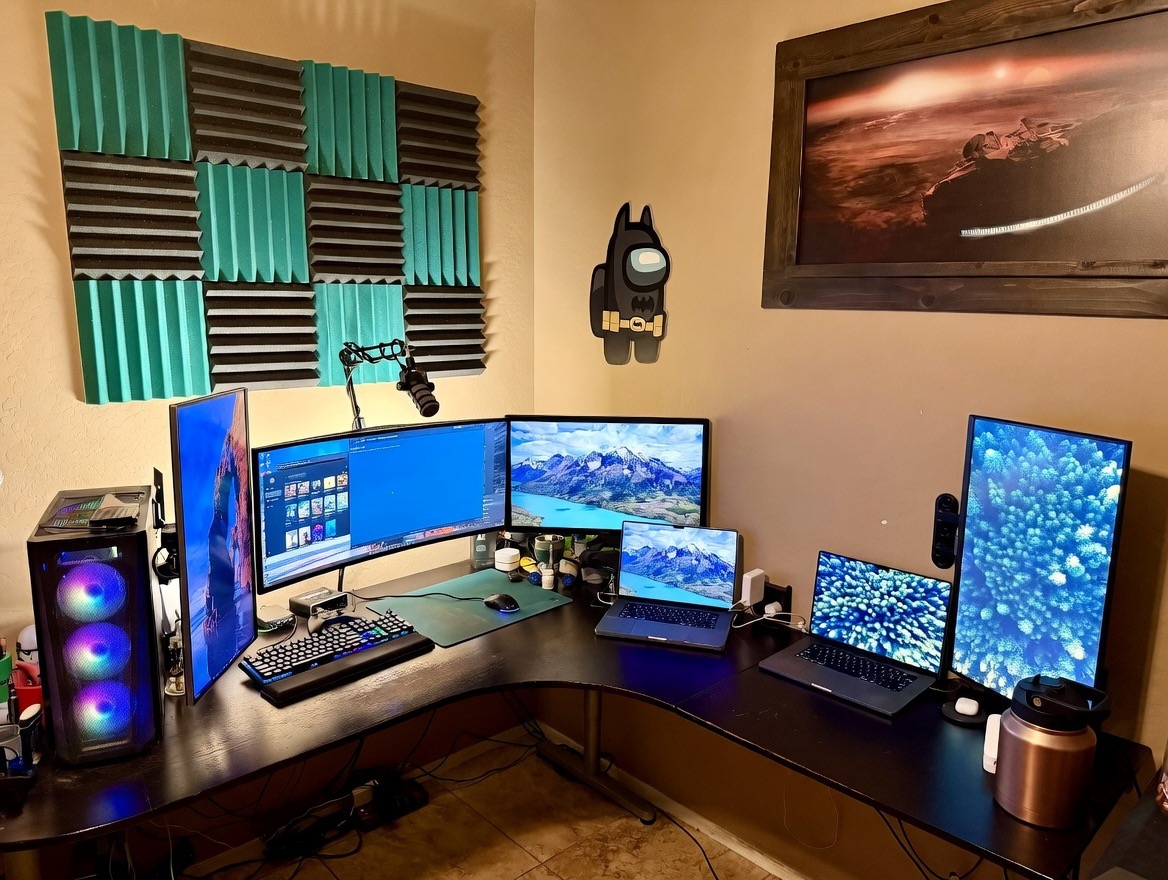
Outside of work, I'm always building something. I blog about clean architecture and technical projects, maintain a GitHub, and run a home lab with Docker hosting game servers, Plex, and home automation for friends and family. I tinker with AI tools daily and try to stay ahead of where the industry is going. I also love working with my hands — cars, motorcycles, 3D printing — because sometimes it's nice to solve problems where things unbolt and bolt back on.

This blog is a place for me to think out loud, share what I'm learning, and document the projects I'm building. If something here helps you, that's a win.